ABOUT
NOTA | ZELDA | THE PROJECT
NO TECH FOR APARTHEID (NOTA)
In May 2021, during the repressive violence in Sheikh Jarrah and al-Aqsa Mosque in Palestine, Jewish Diaspora Solidarity, along with Palestinian Googlers and members of Alphabet Workers Union (AWU) wrote a petition, gathered signatures and released it publicly. While writing this letter, we learned that Google and Amazon signed the Project Nimbus contract for $1.2B the same week, while bombs were being dropped in Gaza and Palestinians were being displaced, jailed and terrorized in the West Bank and Jerusalem. Releasing the letter publicly got us connected with organizers at Amazon that were planning something similar, and sparked additional letters from other tech companies including Apple. This also brought us into contact with organizers from MPower Change and Jewish Voice for Peace (JVP). Collectively workers from Amazon and Google and organizers from MPower Change and JVP started the #NoTechForApartheid (NOTA) campaign, sponsored by these same orgs. Prior to October 7th, NOTA was a relatively small, but dedicated group. After October 7th, with renewed support driven by the urgency of the moment, NOTA rapidly expanded as we brought in many new people, including folks from outside Google/Amazon, and began coordinating more directly across companies. NOTA is still growing, and we're continuously working on staying organized and engaged as we build a mass base of workers.
What is Project Nimbus?
Project Nimbus is a $1.2 billion dollar contract between Google, Amazon, and the Israeli government to provide the Israeli government with a local cloud infrastructure. Google is directly providing the Israeli government with “commercial use” AI/ML including "facial detection, automated image categorization, object tracking, and even sentiment analysis" (The Intercept). The potential surveillance and military applications of this technology are clear. Although Google claims this is not a military contract, the Israeli Defense Forces (IDF) is heavily involved in its implementation. Oracle was rejected by the IDF because, amongst other things, it lacked support for “advanced services needed for big data analysis, which are necessary for supporting artificial intelligence and machine learning technology” (Calcalist).
WHO IS ZELDA?
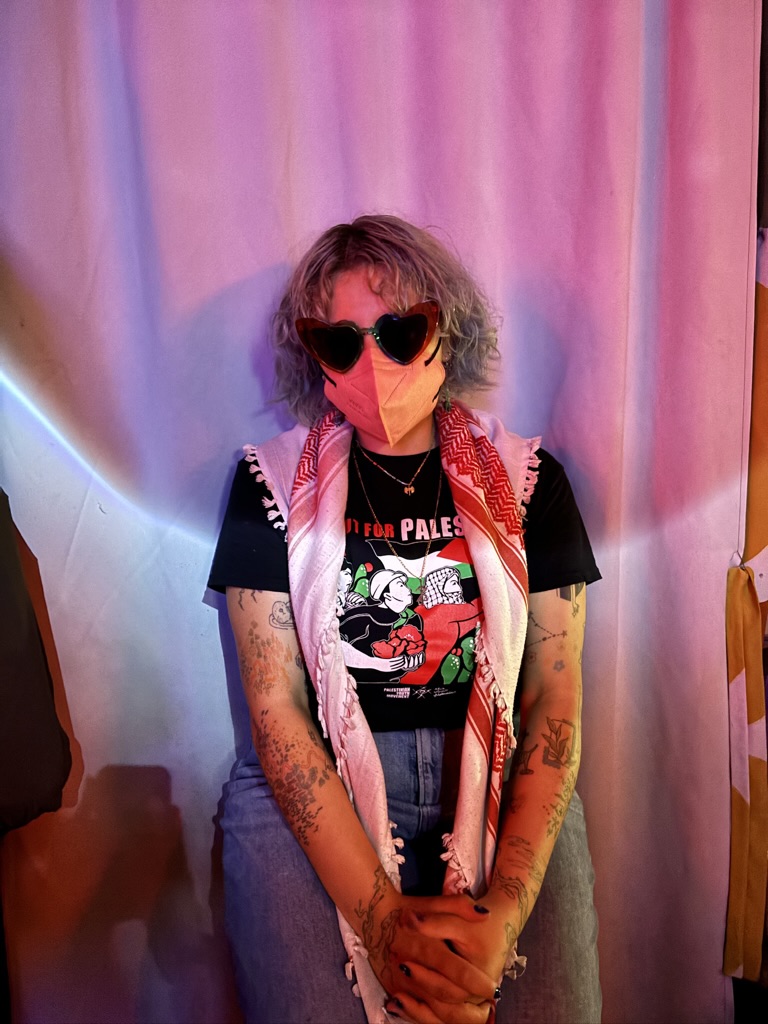
Zelda Marcela Montes is a non-binary, Latine software engineer and an M.A. candidate in Digital Humanities at the CUNY Graduate Center. They graduated from Yale University with a B.A. in Computer Science in May of 2022, where they spent their time during the semester working various part-time jobs, engaging in on-campus organizing efforts, and serving in community roles advocating for underrepresented and marginalized folks in tech during the semester. Zelda's research interests include urban, gender, and ethnic studies, and they are often looking for ways to bring these areas of passion into the work they do in technology. Their academic work explores how digital archives can be sites of tech labor resistance through transmedia collective memory practices. Zelda has worked on projects such as More than Surviving, a digital archive of Wampanoag political agency in the antebellum era, and Palabra Campesina, a community oral history project centered on Watsonville's farmworker communities.
Zelda Montes became a labor organizer with NOTA in November 2023, while working as a software engineer at Google. After being fired and arrested due to a sit-in protesting Google's Project Nimbus on April 16th, 2024, Zelda has been spending their free time reading, protesting, and organizing workers further with NOTA. They are responsible for creating this web application in Python and Django, designing the Application Program Interface (API) to handle retrieving the archival materials and press from the Baserow database, constructing the annotated timeline of NOTA+GOOG NYC events, and conducting the oral history interviews present on the site.
THE PROJECT
The NOTA Google NYC Digital Memory Archive is a project centering the worker narrative in tech labor struggles in the wake of the ongoing genocide of the Palestinian people. How have Google workers engaged in labor organizing through No Tech For Apartheid (NOTA) in 2024? What are some of their experiences as they build worker power to oppose Project Nimbus? Seeking to combat the silencing around the nature of labor organizing by Google (GOOG), this project features an annotated historical timeline of NOTA+GOOG NYC events, oral history interviews from NOTA Google NYC organizers, as well as an archive of press interviews, personal journal entries, art, zines/flyers, newspapers, stickers, images, and legal documents. The target audience of this project is mainly NOTA, Google, and wider tech workers interested in labor organizing. This project is inspired by counter-archives, especially as it relates to the often suppressed labor narratives of workers in the tech industry.
What does the future hold?
In the near future, Zelda hopes to continue expanding the scope of the archive to incorporate the oral history testimonies of other organizers in NYC. Furthermore, they are interested in capturing different local efforts happening at various NOTA hubs across the US and abroad. As such, this archive could be catalogued by different sites of NOTA organizing. Lastly, Zelda wishes to develop educational materials that guide other tech workers to engage in tech labor resistance through the creation of digital memory archives. While NOTA has focused on demanding Google and Amazon drop Project Nimbus, the wider tech industry is implicated in other ways with regards to the surveillance and genocide of the Palestinian people. It is imperative not only for workers to resist, but for alternative cyber-infrastructures that document resistance to be developed as well.
Special Thanks To...
The City University of New York Graduate Center and the M.A. Program in Digital Humanities for encouraging my academic pursuits grounded in my lived experiences. I am especially grateful for Professor Aránzazu Borrachero, who helped me recognize the importance of creating the NOTA Google NYC Digital Memory Archive. Her kindness, mentorship, knowledge, and guidance have supported me in extending upon the archive through an oral history lens.